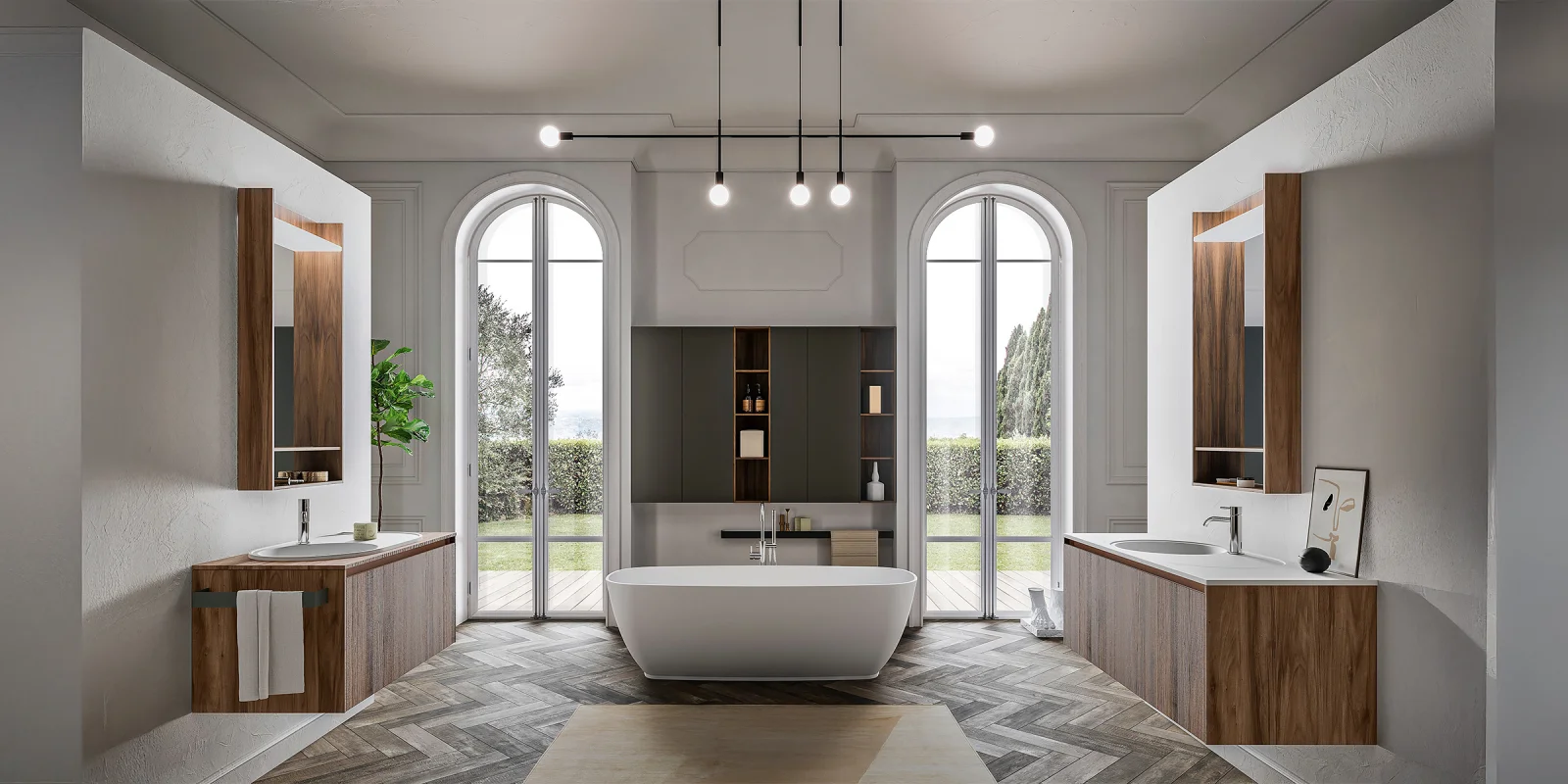
Designing a high-end bathroom does not rest on style or layout alone: everything begins with the choice of the right materials. Between refined aesthetics, resistance to humidity and ease of daily upkeep, every detail counts to create a lasting space of comfort. Here are the noble materials that make the difference in modern bathrooms in Morocco.
You can also touch and compare these materials in real conditions in our Tangier showroom before making your decision.
Marble: natural elegance par excellence
Used since Antiquity, marble remains the reference material in high-end bathrooms. Its unique veining and luxurious appearance make it a timeless choice for vanity tops, shower walls, floors or even bathtub shelves. No two blocks of marble are identical : it is this singularity that makes it a safe value for an exceptional interior.
The same rigour applies to designing a bespoke dressing room : every material must be chosen for its resistance as much as for its aesthetics.
When should you choose marble?
Marble is particularly suited to large bathrooms where it can express itself fully. It is ideal for creating the "modern hammam" effect much appreciated in Morocco, by clothing the walls and floor in the same stone for total visual continuity. Its upkeep requires regular hydrophobic treatment to preserve its lustre against humidity.
Quartz: robustness and controlled aesthetics
Quartz is a composite material highly prized for vanity tops, wall coverings and bathroom shelves. Unlike marble, its non-porous surface naturally resists stains and humidity, with no special treatment. It offers a wide choice of colours and finishes, from pure white to graphite via stone effects, making it a highly versatile material.
When should you choose quartz?
Quartz is recommended for families seeking the look of marble with simplified upkeep. It is also an excellent choice for long vanity tops, where the surface regularity of quartz is an advantage over natural marble.
High-end ceramic: style and ease of upkeep
New-generation ceramic, and large-format porcelain in particular, has revolutionised contemporary bathrooms. Available in 120x120 cm slabs or larger, it allows joints to be reduced to a minimum for a near-continuous finish on walls and floors. Its resistance to water, chemicals and shocks makes it one of the most durable solutions on the market.
When should you choose high-end ceramic?
Large-format ceramic is ideal for medium to large bathrooms, where its big slabs create an impression of space. It adapts to any style: polished concrete effect for a contemporary interior, marble effect for a luxurious rendering at lower cost, or wood effect to bring warmth without the constraints of real wood. The same attention to detail is found in the choice between open or closed kitchen, where every material influences the overall atmosphere.
Treated wood: warmth and authenticity
Contrary to received ideas, wood finds its place perfectly in a bathroom, provided it is properly treated against humidity. Teak, oak or walnut are noble species that bring warmth and authenticity to your bathroom. They are mainly used for vanity units, wall niches, shelves or decorative details that break the mineral feel of the other materials.
When should you choose treated wood?
Wood is recommended as an accent material rather than as the main covering in a bathroom. An oiled oak vanity unit paired with a white quartz vanity top creates a very elegant balance between warmth and modernity, a combination in high demand in upscale projects in Tangier.
Glass: the asset of light and transparency
Shower screen, vessel basin, made-to-measure mirror or even wall covering, safety glass is a key material to bring brightness and transparency to your bathroom. It visually lightens the space and gives an impression of additional volume, particularly valuable in modestly sized bathrooms. The finishes available are many: clear, frosted, tinted or printed.
How to combine these materials?
The most successful high-end bathrooms generally do not bet on a single material, but on a thought-through combination. A simple rule: choose a dominant material for large surfaces (floor and walls), an accent material for furniture and a functional material for fittings. For example: porcelain tiles with a marble effect + oak vanity unit + glass shower screen + gold tap. It is this coherence between materials that creates a truly high-end result.
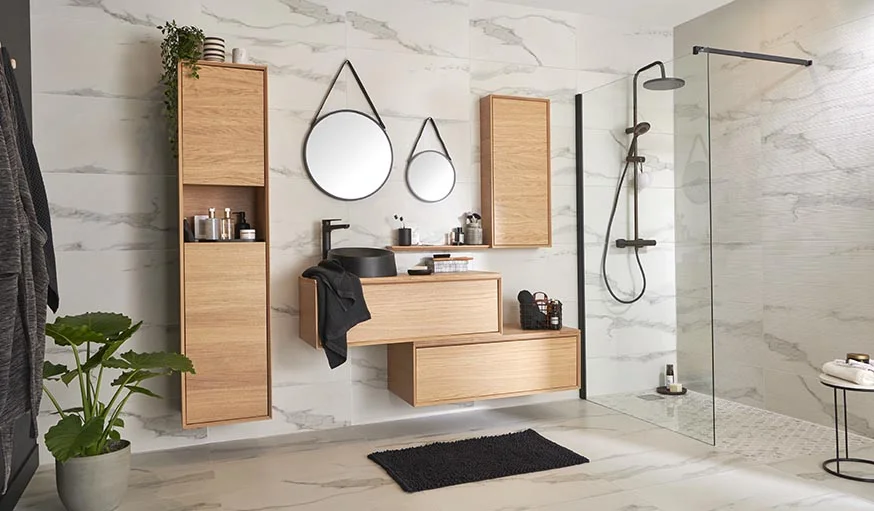
At OSMOSIS HOME, we guide you through the choice of materials to design a bespoke bathroom in Morocco that matches your lifestyle and your budget. Browse our bathroom projects in Tangier to see the result.
Conclusion
Opting for noble materials means investing in the durability, comfort and aesthetics of your bathroom over the long term. The quality of materials is what differentiates an ordinary bathroom from a true space of well-being, a detail that matters even more when it comes to preparing your bathroom for festive occasions. Come and discover our displays and finishes in our Tangier showroom to view the materials in real conditions before deciding.
Describe your project and benefit from the expert advice of our bespoke bathroom specialists in Tangier.