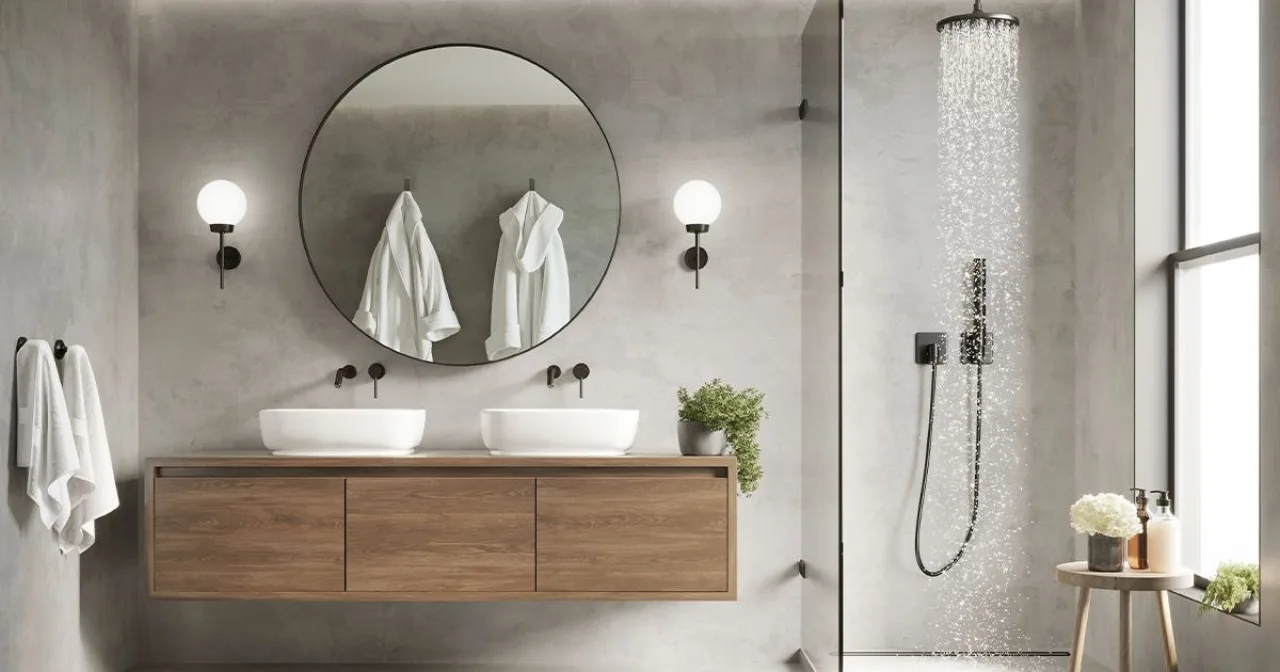
Choosing bathroom furniture involves far more than a simple aesthetic decision. It determines the daily functionality of an often compact space, the durability of an investment constantly exposed to humidity, and the level of care one brings to their home. For those seeking a bathroom designed to measure and crafted from quality materials, the process always begins with a clear understanding of the market: what to expect, what to demand, and why the displayed price never tells the whole story.
A Moroccan Market in Full Transformation
The bathroom furniture market in Morocco has undergone a profound transformation over the past decade. Where once only standardised local production or European imports reserved for affluent clients could be found, a considerably broader mid-range now exists : but also, and this is where the trap so often closes, an entry-level segment whose durability leaves much to be desired when faced with the permanent humidity of a wet room. Major cities, Casablanca, Rabat and Tangier foremost among them, are seeing a proliferation of showrooms, importers and retail brands. This abundance of choice makes selection more difficult, not easier.
What the Price of Bathroom Furniture Really Reflects
A standard moisture-resistant MDF bathroom unit starts at between 1,500 and 3,000 dirhams in large retail outlets. This is a functional entry-level option, though one whose edges and carcasses quickly suffer from recurring humidity. Mid-range options, priced between 4,000 and 10,000 dirhams for a single-basin unit, incorporate better-treated panels, superior-quality fittings and more refined finishes. Beyond that, one enters the realm of bespoke and high-end: technical materials, Blum hardware, matt lacquer or natural oak fronts, and assembly precise to the millimetre. This is not superficial luxury : it is the assurance that the piece will remain impeccable a decade from now.
The Materials That Make the Difference
Moisture-resistant MDF remains the most widely used base material, provided it has been properly treated in the factory rather than simply painted on the surface. Expanded PVC, even more impermeable, is suited to particularly humid environments such as windowless bathrooms. Yet it is solid wood, treated and oiled, that continues to appeal to those seeking an authentic character in their space. Thermoformed fronts offer soft curves and perform well under hygrometric variations, while satin matt lacquer finishes bring a refined, understated elegance that ages with dignity. The choice of basin surface (ceramic, mineral resin or Corian) completes the ensemble and plays a decisive role in ease of day-to-day maintenance.
The Importance of the Mirror in a Coherent Design
Bathroom furniture is never appreciated in isolation. The mirror is the element that extends its presence upward, visually enlarges the space and determines the quality of light perceived each day. Choosing a mirror whose format, frame or integrated lighting harmonises with the unit is a decision many overlook, only to regret it later. To explore this further, our dedicated guide on bathroom mirrors in Morocco, their formats and finishes provides concrete reference points for making the right choice.
Undermount, Countertop or Wall-Hung Basin: A Defining Choice
The type of basin determines not only the aesthetic of the unit, but also its internal architecture and how easily the worktop can be cleaned. The undermount basin creates a continuous, fluid line found in the most refined contemporary bathrooms. The countertop basin, often in glazed ceramic or matt mineral resin, projects a strong character and suits spaces that welcome a degree of formality. The wall-hung or semi-recessed basin, finally, frees up the worktop surface and simplifies cleaning. Understanding these distinctions is essential before placing any order: our article on the bespoke bathroom basin explores these options in detail and helps identify the most suitable choice for each configuration.
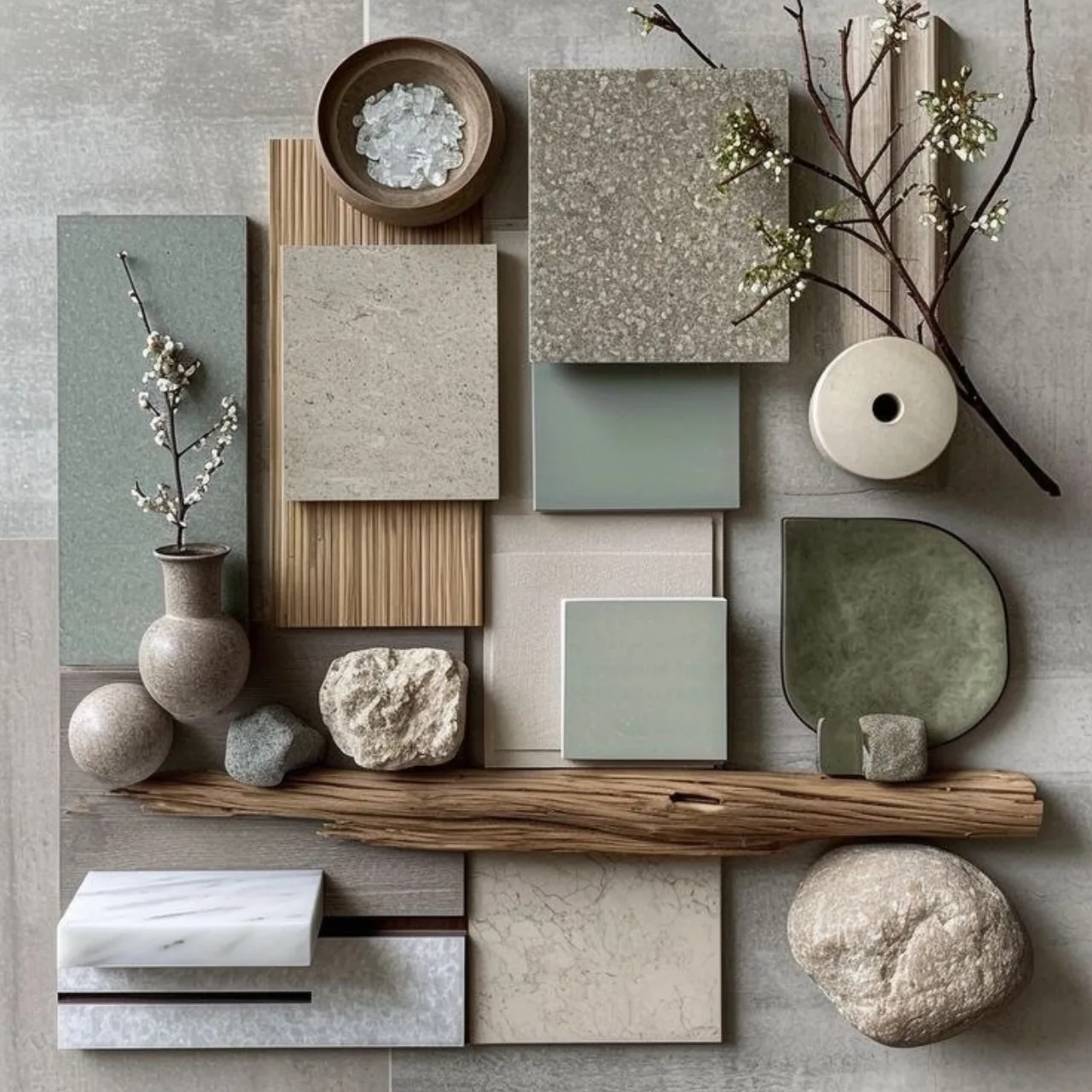
The most pronounced trend remains the return to natural and raw materials: bleached oak, polished concrete, natural stone basin surfaces.
Storage: The Overlooked Element of Many Projects
Thought is often given to the under-basin unit, rarely to the full volume of storage a bathroom should provide. Everyday essentials (cosmetics, medicines, bath linen, small appliances) accumulate quickly and disorganise a space one wishes to keep serene. A well-considered bathroom project integrates storage columns, recessed wall shelving or tall units coordinated with the basin furniture from the very outset of the design. The result is a coherent, cohesive whole, the kind of refined ensemble one admires as much as uses. Our guide on bathroom storage in Morocco details the most appropriate solutions for Moroccan spaces, whether compact or generous.
The Trends Shaping Tomorrow's Bathroom
The high-end Moroccan market is not immune to the broad directions sweeping European design, often with a season or two's delay. The most pronounced trend remains the return to natural and raw materials: bleached oak, polished concrete, natural stone basin surfaces. Colour palettes are deepening: clinical white is losing ground to anthracite grey, sage green and matt terracotta. Handle-free fronts, opened by a simple push or a routed groove, lend an architectural solidity now shared by high-end kitchens and bathrooms alike. On the hardware side, matte black or brushed gold fittings have established themselves as a defining detail capable of elevating a standard unit into a statement piece. It is this convergence between international trends and local sensibility that guides our approach at Osmosis Home.
Why Bespoke Is the Natural Choice in Tangier
Apartments and villas in Tangier rarely conform to standard configurations. Walls are not always straight, pipework imposes its own constraints, and natural light varies considerably from one apartment to the next. A flat-pack bathroom unit designed for a "typical" bathroom that exists in no real home inevitably generates visual and functional compromises. Bespoke work resolves these issues at the source: every carcass is dimensioned to the exact measurement, every front is chosen in harmony with the rest of the space, every detail is validated before production begins. Our manufacturing partners, RotPunkt in Germany and In-Ipso in France, give us access to finishes and hardware systems not available through conventional retail. If you would like to see these projects in their real context, our showroom in Tangier, Avenue Abderrahman El Youssoufi, is open to welcome you and allow you to assess the materials under real conditions.
Conclusion
Choosing bathroom furniture in Morocco means navigating a heterogeneous market, often opaque pricing and widely varying quality standards. What distinguishes a piece bought to last a decade from one that barely survives two years is rarely the surface aesthetic : it is the quality of the carcass material, the precision of the hardware, the robustness of the moisture-resistant treatment and the overall coherence of the project. At Osmosis Home, every bathroom project begins with an in-depth consultation and concludes with a realisation adjusted to the millimetre, manufactured by our European reference partners. If you have a project in mind, however undefined it may still be, describe your project and we will respond with concrete proposals tailored to your space and your expectations.